


Reliable Robotics Corporation
Building a certifiable autonomous flight system that lets existing aircraft fly gate to gate under remote supervision, starting with cargo.

Overview: The SpaceX alumni betting the plane can fly itself, if the FAA signs off
Reliable Robotics started with a number that is hard to ignore: more than 70 percent of fatal general aviation accidents in the United States could be prevented with better automation. The company's answer is an aircraft that flies itself gate to gate, with a remote pilot supervising from the ground instead of sitting in the seat.
Robert Rose and Juerg Frefel founded it in 2017, both out of SpaceX, where Rose ran flight software for Falcon 9 and Dragon and Frefel led the avionics platforms underneath them. That pedigree is the whole thesis. The hard part of autonomous flight was never the flying. It is convincing the FAA, and Reliable has spent its history building the certification case rather than a flashy demo.
What They Do: One certifiable autopilot, retrofit onto aircraft that already exist
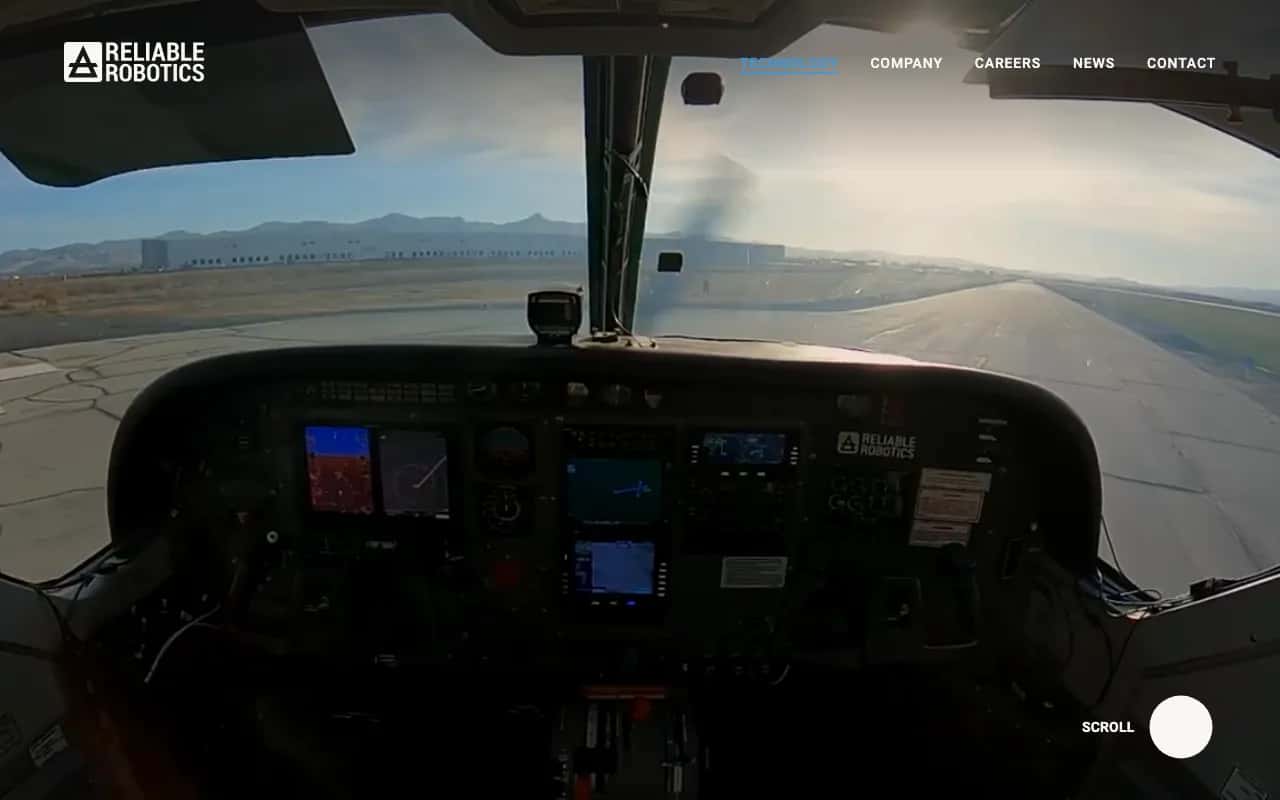
Instead of designing a novel aircraft, Reliable takes a type certified plane and adds the pieces that let it operate without a pilot on board: high-integrity navigation, full-authority flight controls, secure air-to-ground links, air-to-air radar, and fault-tolerant compute. The result is the Reliable Autonomy System, a flight control system that stays engaged through every phase, taxi, takeoff, enroute, and landing.
The design choice that matters is the retrofit. Working with an existing airframe means an existing certification basis, which is why the company got the FAA to accept a certification basis in 2022 and a certification plan in 2023 while most autonomy startups were still arguing about it. The system is aircraft and airspace agnostic, so the same stack is meant to serve civil cargo and military logistics alike.
Problems: Fixing the two things that kill pilots and strand small towns
The safety pitch is specific. Reliable's automation targets the accident categories that dominate the fatality data, controlled flight into terrain and loss of control in flight, by keeping the autopilot engaged and terrain-aware from gate to gate.
The access pitch is the other half. Since 2019 more than 300 rural communities have lost or seen reduced air service, and thousands of general aviation airports sit mostly unused because a crewed regional flight does not pencil out. Take the pilot out of the cost structure and those routes start to make sense again.
How it Happens
Who It's For: Cargo first, the military in parallel, passengers much later
Reliable is deliberately starting with freight. Its near-term customer is the regional cargo operator flying Part 23 aircraft, where an uncrewed plane is easier to certify and the economics of thin routes are the whole point. Passenger service under Part 25 is on the roadmap, not the pitch deck's front page.
The second buyer is the U.S. government. The company is under contract with the Air Force to automate a Cessna 208B Caravan for contested logistics in the Indo-Pacific, and it is working with NASA and the FAA on the testing that clears the path for everyone else.
Ideal Customer Profiles
- Thin routes that do not pencil out with a crewed regional flight
- Reaching underserved general aviation airports
- Resupply in contested, austere environments like the Indo-Pacific
- Pilot shortages stretched across vast theaters
- Preventing the accident categories that dominate fatality data
- Establishing a certification path and standards for uncrewed operations
Products: Everything that turns a normal Caravan into an uncrewed one
The Reliable Autonomy System is really a bundle of safety-critical subsystems that have to work together and, crucially, be certifiable together. The headline is full-authority flight controls on triple-redundant hardware and software, but the less glamorous pieces, the anti-skid braking that prevents runway excursions and the terrain-aware flight planning, are what make gate-to-gate autonomy real rather than a marketing line.
The two pieces the company talks about most are its detect-and-avoid radar and its remote piloting model, both of which are the frontier of what the FAA has to accept before uncrewed flights go commercial.
Business Model: Sell the automation, not the airplane
Reliable does not build aircraft. It builds and installs an autonomy system onto planes operators already fly, which keeps it out of the capital-heavy business of manufacturing airframes and squarely in the higher-margin business of certifiable software and avionics. Revenue today leans on government and agency contracts, including a multi-year Air Force award and FAA and NASA testing work, which fund the technology while the commercial cargo certification is still in progress. Pricing is not published; these are negotiated enterprise and defense contracts.
Negotiated enterprise and defense contracts (not published)
Competition: Certification is the moat, not the algorithm
Plenty of companies can make an aircraft fly on its own in a demo. Almost none have gotten a regulator to agree on how to prove it is safe. Reliable's edge is that it picked the certification fight first: an FAA-accepted certification basis and plan, an existing airframe, and a system built from the start against aerospace assurance standards like DO-178C and DO-254.
That is also the risk. The strategy only pays off if the FAA actually issues the certification, and the timeline for that sits partly outside the company's control.
Their edge
Where they're betting
- Securing the first FAA certification for fully automated commercial cargo flight (Part 23)
- Deploying dual-use autonomy for the U.S. Air Force in the Indo-Pacific
- Expanding from cargo toward Part 25 passenger aircraft over the longer term
Proof: A decade of firsts, on the record with the FAA
Reliable prefers milestones to promises, and it has a run of them. It demonstrated fully automated regional cargo operation from departure gate to arrival gate, got the FAA to accept its certification basis in 2022 and its certification plan in 2023, and was awarded military airworthiness in 2024.
More recently it flew the first test of its detect-and-avoid radar in 2025, strung together seven consecutive autolands the same year, and completed FAA-contracted detect-and-avoid flight testing in airport environments in 2026. In March 2026 the FAA selected Reliable and the City of Albuquerque for its Advanced Air Mobility Integration Pilot Program, aimed at the first commercial regional air cargo service by a large uncrewed aircraft in the U.S.
What People Say: A talented, mission-driven crew, with SpaceX intensity to match
The praise is consistent: employees describe an unusually talented and humble team, a clear mission, strong onboarding, and a culture people compare to family. Unlimited PTO and a genuine sense of purpose come up often.
The criticism is just as consistent, and it rhymes with the founders' background. Reviewers cite a SpaceX-like intensity, crunch periods and burnout, and compensation that some feel does not stretch far enough for the Bay Area even with stock options. The mostly-remote setup also leaves some on-site staff feeling isolated.
Employees consistently praise the talent, mission, and onboarding, and just as consistently flag SpaceX-style intensity, burnout risk, and Bay Area comp that stock options do not fully offset. Roughly 4.2/5 on Glassdoor across a small number of reviews.
- Unusually talented but humble, approachable team
- Clear, compelling safety-and-access mission
- Strong, well-organized onboarding
- Family-like culture with little bureaucracy
- Unlimited PTO
- SpaceX-like intensity with crunch periods and burnout
- Compensation seen as tight for the Bay Area even with stock options
- Mostly-remote setup can leave on-site staff feeling isolated
- Concerns about work-life balance and career development
Funding: $160M more, a valuation near $1B, and a Boeing-and-RTX cap table
In April 2026 Reliable raised $160 million in a Series D led by Nimble Partners, pushing total funding to roughly $300 million and the valuation to nearly $1 billion. The money is earmarked for exactly what the strategy demands: more engineers and more evidence to hand the FAA for a first commercial uncrewed cargo certification.
The more telling detail is who is on the cap table. Alongside Eclipse, Lightspeed, Coatue, and Pathbreaker, the round pulled in strategic investors from across aerospace and defense, including AE Ventures tied to Boeing, RTX Ventures, Presidio Ventures from Sumitomo, and Socium Ventures from Cox Enterprises.
Total raised
Valuation
Latest round
Backers
Outlook: One certification stands between the plan and the payoff
Reliable has done the patient, unglamorous work: an accepted certification basis and plan, military airworthiness, a defense contract, and a cap table stacked with aerospace strategics. The technology milestones keep landing, from seven straight autolands to detect-and-avoid testing in real airport airspace.
What is left is the hardest part it does not fully control. The entire bet resolves when, and if, the FAA issues the first certification for fully automated commercial cargo flight. Get there and the rural-air-service and defense-logistics markets open at once. Miss the timeline and it stays a very well-funded science project.
Team & Culture: Built by aerospace and self-driving veterans who like hard problems
The company recruits mission-driven engineers out of aerospace, robotics, and self-driving cars, and it shows in how the work is framed: safety-critical, hands-on, and cradle-to-grave ownership of the hardware and software you ship. Roles repeatedly describe small teams that take products from prototype to production, and a preference for lifelong learners who want to build the company from the ground floor.
The footprint tracks the mission. Engineering and HQ sit in Mountain View, with flight and production work in San Martin, California, a growing operations base in Albuquerque tied to the FAA pilot program, radar work in Seattle, and pilots stationed as far as Guam.
- Values
- Mission-driven engineers drawn from aerospace, robotics, and self-driving cars, Safety-critical, hands-on work taking products from prototype to production, Cradle-to-grave ownership of hardware and software, Small teams, wear-multiple-hats, ground-floor company building, Intense, fast-paced, SpaceX-influenced pace
- Work policy
- Hybrid. Many engineering roles are Mountain View, CA onsite or remote-eligible; hardware, production, and flight roles are onsite in Mountain View, San Martin, Albuquerque, or Seattle; pilots are stationed in the field (including Guam). Most roles require U.S. person status due to export controls.
- Hiring
- Hiring across engineering (GNC, flight software, embedded, avionics hardware, radar), systems and safety, production and manufacturing, flight ops and test, and airline operations, primarily in Mountain View and San Martin, CA, with roles in Albuquerque, NM, Seattle, WA, Guam, and some remote.
- Software
- Python, C++, C, C/C++, Rust, JavaScript, MATLAB
- Embedded / Avionics
- Embedded Systems, FPGA design, FPGA synthesis, FPGA simulation, VHDL, Verilog, Fixed-point DSP algorithms, Fault-tolerant compute
- Safety & Certification
- DO-178C, DO-254, DO-160, ARP4754A, ARP4761, AS9100, 14 CFR Part 145
- Hardware / Electrical
- Altium Designer, Capital Harness Designer, EMI shielding, Connectors / backshells, Full-cycle electronics development
- Mechanical / Manufacturing
- NX, Teamcenter, CAD, PLM, MES, ERP, MRP
- Infrastructure / Build
- Bazel, Continuous Integration, Git, Docker, AWS, GCP, KVM/LXC, Linux
Engineering culture at Reliable Robotics Corporation
- Small, broadly experienced teams that own hardware and software cradle-to-grave
- Hands-on: break development hardware, root-cause failures, redesign, fly it
- Built against rigorous aerospace assurance standards (DO-178C, DO-254, ARP4754A)
Production / Manufacturing culture at Reliable Robotics Corporation
- Takes safety-critical products from prototype to production
- Owns factory infrastructure (MES, ERP, MRP) and quality management systems
- Sets the foundation for how the business scales
Benefits & perks
- Stock options on top of base compensation
- Employee medical coverage
- 401(k) contribution
- Unlimited PTO
- Casual work environment
Open roles · 56
View all roles →Reliable Robotics Corporation is hiring 56 roles across software engineers, and operations.
Compensation: Base plus stock options across a wide engineering band
Compensation is base salary plus stock options, employee medical, and a 401(k) contribution, all in USD. Disclosed engineering bands run wide, from roughly $110,000 at the junior end to $300,000 for senior specialist roles, reflecting how much the pay depends on seniority and domain.
Equity is standard across roles, though some employees note the options do not fully close the gap with Bay Area cash comp. Non-engineering and operations roles land in a narrower, lower band.
Most roles include stock options on top of base; some employees note the options do not fully close the gap with Bay Area cash comp. Standard package also includes employee medical and 401(k) contribution.
Security & Legal: Registered in Mountain View, and serious about export control
The legal entity is Reliable Robotics Corporation, operating out of Mountain View, California, with a privacy notice and terms last updated in January 2022. Standard practices apply: Google Analytics for site metrics, the usual cookie and data-collection disclosures, and California and Nevada privacy supplements.
The sharper detail is export control. Because the autonomy system is dual-use defense technology, every job requires the applicant to establish U.S. person status, and access to the technology is gated by U.S. export control law.
Legal entity
Registered address
Certifications
Data practices
In the News: From Congressional testimony to a Transportation Secretary's visit
Reliable spends real energy in Washington, and the coverage reflects it. CEO Robert Rose testified before Congress on U.S. aviation leadership in late 2025, and in June 2026 Transportation Secretary Sean Duffy toured the company's Albuquerque operation.
The substantive news is the flight testing and the money: FAA-contracted detect-and-avoid testing, a NASA contract for airport-area operations, and the $160 million Series D that Bloomberg framed as a push toward the first commercial uncrewed cargo certification.
Reliable Robotics Announces $160M in New Investment
SpaceX Alum's Startup Nears $1 Billion Valuation in Pursuit of Uncrewed Flights
U.S. Air Force Awards Reliable Robotics Multi-Year Contract for Dual-Use Advanced Aircraft Automation
Reliable Robotics Completes Detect and Avoid Testing for the FAA
Reliable Robotics, City of Albuquerque Partner on FAA Advanced Air Mobility Integration Pilot Program
NASA, Reliable Robotics Contract Advances UAS Integration Near Airports
Robert Rose, Reliable Robotics: Congressional testimony and conveyor belts in the sky
Transportation Secretary Sean P. Duffy Visits Reliable Robotics
More in Aviation & Space
Other companies hiring in the same space.

ICEYE (186 jobs)
ICEYE operates the world's largest synthetic aperture radar satellite constellation, selling all-weather, day-and-night Earth observation data and sovereign satellite systems to governments and businesses.

Apex Technology, Inc. (116 jobs)
Apex designs and manufactures productized, configurable satellite bus platforms at high rate to eliminate the production bottleneck for proliferated commercial and government constellations.

The Exploration Company (102 jobs)
European space-transport startup building Nyx, a reusable cargo capsule, and Storm, a high-thrust rocket engine.
Backed by Coatue
Companies that share an investor.

OpenAI (818 jobs)
Builds frontier AI models and ships them as consumer, developer, and enterprise products — ChatGPT, the API platform, and Codex.

Harvey (296 jobs)
Domain-specific AI for legal and professional services that automates research, drafting, contract analysis, and due diligence.

ElevenLabs (236 jobs)
AI research and product company building foundational audio models for voice synthesis, conversational agents, and creative media generation.

Mistral (199 jobs)
A French AI lab building open and frontier-grade large language models, with the full developer and enterprise stack around them.

Formenergy (198 jobs)
Multi-day iron-air battery storage for the electric grid, made in America.

Base Power Company (192 jobs)
Base Power installs home batteries and sells below-market energy in Texas, earning its margin from the grid instead of your bill.

Checkout.com (162 jobs)
Global enterprise payments platform that helps large merchants accept, move, protect, and optimize money through one API.

Ramp (148 jobs)
All-in-one AI finance platform: corporate cards, expense management, bill pay, procurement, travel, treasury, and accounting automation.

Decagon (146 jobs)
Autonomous AI agents that resolve enterprise customer support end to end across chat, voice, email, and SMS.